Covered bridges, historic homes, magnificent museums, and local landmarks tell as much of a story of the Granite State’s historic landscape as snow-capped mountains, fall foliage, and wooded wilderness reveal about the White Mountain’s physical landscapes.
Are you ready to experience the White Mountain’s cherished past? You can start at the residence of one of our nation’s most revered writers.
Franconia
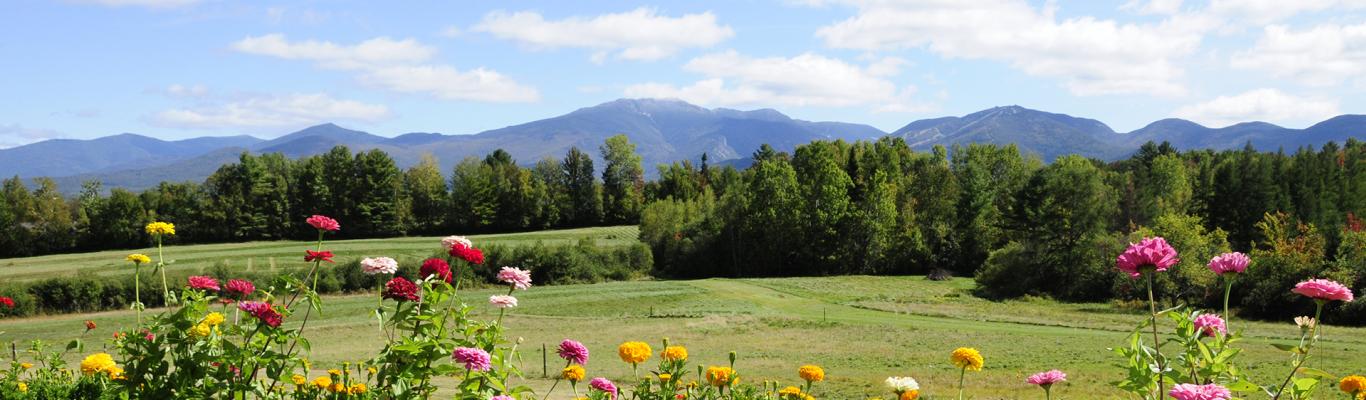
Starting in Franconia off I-93, The Frost Place has stood for more than 100 years, and Robert Frost lived here with his family from 1915-1920, but 2026 marks the 50th anniversary of the establishment of the Frost Place as a museum and non-profit poetry center for the arts. The views of the White Mountains from his porch are worth a visit by themselves. There is a quarter mile long poetry trail through the woods containing Frost’s historic poems. The house is open exclusively in summer and fall, but the beautiful natural surroundings are accessible year round and show the palate Frost had to create his poems. The woods surrounding the home are “lovely, dark, and deep,” as Frost described in Stopping By Woods On a Snowy Evening, and worth experiencing for yourself.
South of the Frost Place off I-93 is the New England Ski Museum and the Old Man of the Mountain Historic Site. The New England Ski Museum displays original replicas of pre-historic ski equipment, memorabilia honoring local hero Bode Miller, and an exhibit chronicling the rise of freestyle skiing and snowboarding from local routes to national phenomenon.
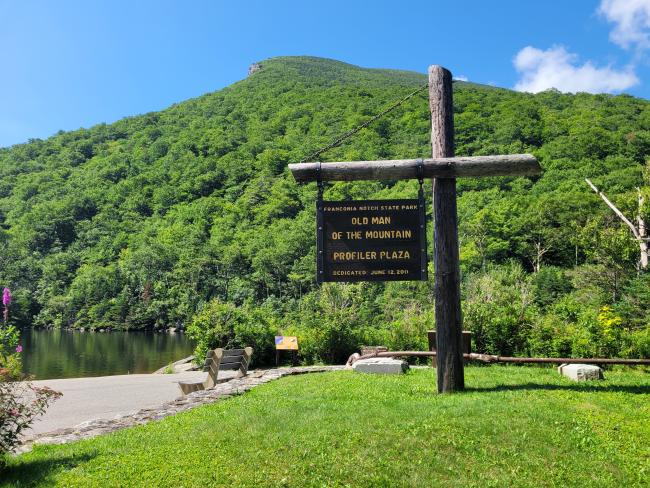
Next year celebrates the 15th anniversary of the creation of the Old Man of the Mountain Historic Site. New Hampshire’s most identifiable natural feature of rock ledges forming the likeness of an old man crumbled in May of 2003, but the Old Man of the Mountain Legacy Fund was created to build a memorial for the most iconic Granite State Landmark. At Exit 34B off of I-93 near the shores of Profile Lake stands seven steel profilers framing the Old Man’s famous face. There is also an exhibit open from May to October containing photographs and memorabilia honoring the state’s most famous emblem, and over 1,000 personally messaged stone pavers purchased by locals to fund the memorial.
Moving south to Exit 32 on I-93 enters the village of North Woodstock and Lincoln where you can stop at the White Mountain Visitors Center and take in all in the information, knowledge and friendly customer service to supplement your historic journey through the White Mountains. You’ll also begin your trek along the wonderful, winding, up and downhill highway that is the Kancamagus Highway.
“The Kanc” is known for its signature vistas of fall foliage, but its views of majestic mountains, raging rivers, and wondrous waterfalls are available year round and worth a stop at one of the several scenic overlooks or hiking trails.
Near the east end of the highway is the tiny village of Albany with less than 1,000 year round residents. The first landmark visitors will encounter is the Russell-Colbath Historic Site. It is located directly off the highway near the Jigger Johnson Campground. The site features a wood framed house built by local residents Thomas and Anzi Russell in the 1830s. It functioned as a local farm in the 19th century and operates as a museum since being purchased by the United States Forest Service in 1961. It was listed on the National Register of Historic Places in 1987. The home contains photographs and artifacts from the 1800’s and is open to the public from Memorial Day to Columbus Day on Fridays through Wednesdays from 10am-3pm. In addition, you’ll be warmly greeted by a host in 19th garb upon entry to the home.
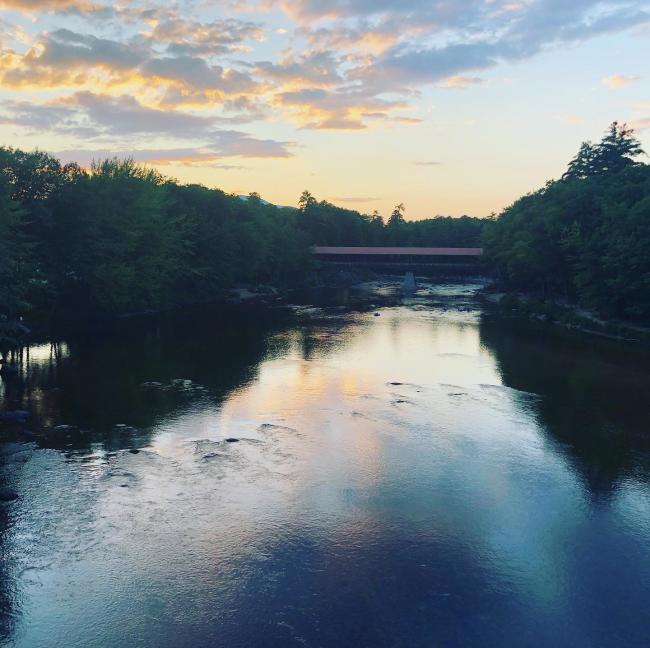
Six miles east on the Kanc is the Albany Covered Bridge on Passaconaway Rd right off the highway. The bridge has stood in the same location since 1858 spanning the scenic Swift River near the Covered Bridge Campground. The bridge is a popular spot for photographers, campers, picnics and other recreation and contains many materials and features from it’s 19th-century construction.
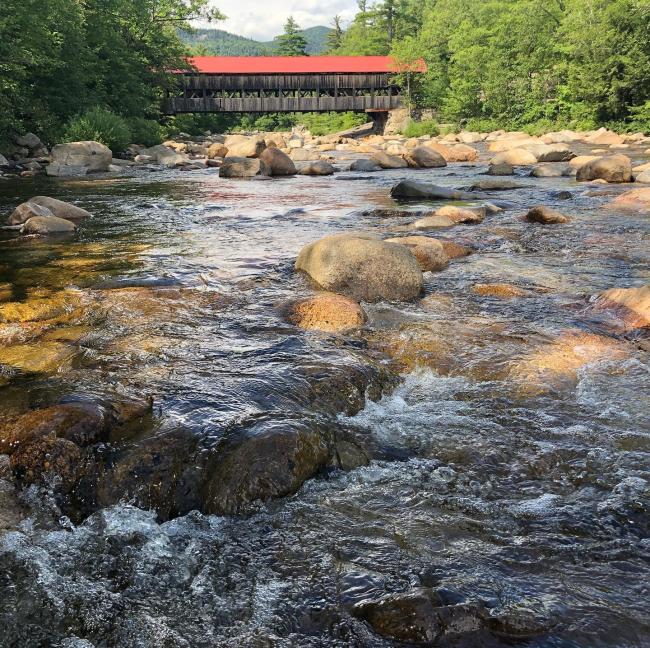
Courtesy Matt Taylor
Conway/North Conway
Turning left off the Kancamagus Highway onto the White Mountain Highway, you’ll encounter two more historic covered bridges after taking a left onto Washington Street in Conway Village. The Saco River Covered Bridge, built in 1890, is a quick turn off Washington onto East End Rd in Conway. The Swift River Covered Bridge is located off of West Side Rd in close proximity to the Saco River Bridge. This bridge was built in 1870 after it was carried off its abutments by a flooding Swift River in 1869. It crashed into the Saco River bridge during the flood and destroyed that bridge as well. The current structure is for pedestrians only and has picnic tables so visitors can enjoy the sound of the rushing Swift River empty into the Saco downstream.
Courtesy Matt Taylor
The Conway Scenic Railroad operates out of a Victorian style train station built in 1874 and islocated in the center of scenic North Conway village. The railroad was listed on the National Register of Historic Places in 1979 and offers riders a look back at a time when vacationers would ride the rails to the White Mountains and the Grand Hotels in the region. The narrator also discusses the importance of the railroads in transporting goods such as lumber and other freight to market. The railroad offers five different excursions through the mountains, rivers, and forests of the Mount Washington Valley and celebrated its 50th anniversary as a premier railroad tourist train two years ago.

Courtesy Matt Taylor
The North Conway 5 and 10 Cent store has stood at the same location since 1840. Added to the National Register of Historic Places in 2004, this Main Street icon has operated continuously under different owners since 1939. The store represents one of the few “false front” building styles of the 19th century and brings customers back to a simpler time as the smell of their fabulous fudge permeates the storefront. The store also carries “penny” candy, books, toys, and other locally handcrafted items for customers to enjoy.
Jackson
Moving north on Route 16, no crossing reminds visitors of a quintessential New England setting more than the Honeymoon Covered Bridge’s entrance into the town of Jackson. This year marks the 150th anniversary of Charles Broughton and his son Frank building this beloved bridge. This scenic structure crossing the Ellis River is not only appealing to the eye, but built to last as it has endured damage from cars, weather, and vandals over a century and a half. The Honeymoon Bridge was named after the custom of couples to steal a kiss under the shaded structure around the 1930s. Today, many newly wedded couples use the bridge as a backdrop for a photo of their special day.

Courtesy Matt Taylor
After crossing the Honeymoon Bridge into Jackson, the Jackson Falls Historic District has more than a dozen buildings on the National Register of Historic Places including: the Old Jackson Public Library constructed in 1901 by famed Boston architect William Ralph Emerson, the Wentworth Castle, and the Jackson Town Hall, which was constructed in 1879 and is still in use today. In addition, Jackson has 14 restaurants, bed and breakfasts, and local inns with histories dating back to 1778. Jackson is also home to two of the original grand hotels of the White Mountains. The Wentworth was a gift from Joshua Trickey to his daughter Georgia in 1869 and her husband General Marshall Clark Wentworth. The Eagle Mountain House opened ten years later in 1879 and was rebuilt in 1916 after being destroyed in a fire.
With more than two dozen historic buildings, Jackson packs a lot of history into a loop of one and half miles (Rt. 16A).
Bartlett and Crawford Notch
Heading back south onto Route 302 North, you’ll enter the town of Bartlett and pass the Covered Bridge Gift Shop. Next to the Covered Bridge House Bed and Breakfast, this covered bridge has served many purposes including carrying traffic until 1939, a storage space for the Town of Bartlett, and finally a gift shop in 1966. It’s the only bridge that functions as a working business in the White Mountains, and one of a handful across the country.
Heading up 302 N is the final stop, the Willey House. The Willey House stands today 200 years after a historic landslide engulfed the area in 1826. The landslide took the lives of Samuel Willey and his family. The house somehow survived due to its location near a rock ledge that re-routed nearly 20 feet of floodwaters and debris away from the home. The house is located in Crawford Notch State Park on Route 302 and is open from the end of May through October.
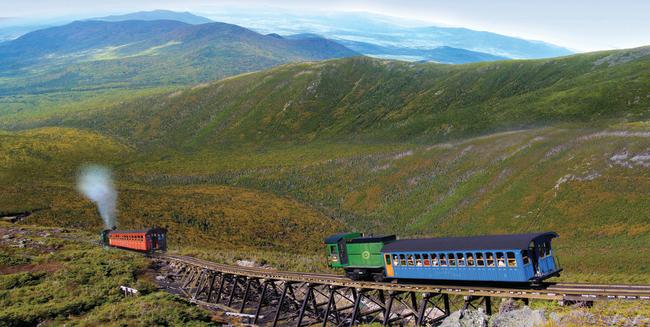
The loop can be completed traveling up 302N, passing the historic Mount Washington Cog Railway, and traversing until its intersection with I-93 S back to Franconia. Historic sites are marked well in New Hampshire for any history buff to enjoy.